Natural Stone vs Reconstituted Stone: Pros, Cons & Which to Choose
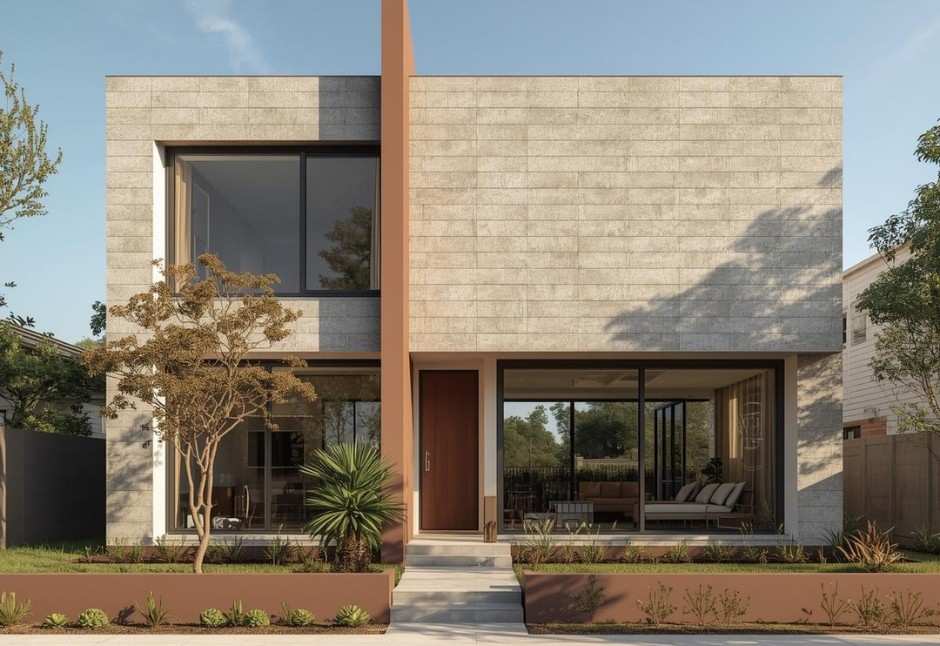
Limestone is not a very new concept in Australian architecture. That’s just a fact. Additionally, it is important to note that most people use limestone in traditional methods of application.
The results are applications that can bore anyone to death because they have been seen so many times before.
Now, if you ask me, that’s a missed opportunity.
There is a lot more to natural limestone, especially the gorgeous Tamala limestone we quarry right here in Western Australia, than just another beige wall.
It has character. It has texture. It has warmth. And when you get a little bit creative (or should I say, outside the standard feature wall?), this material completely transforms the perception of a home.
Here are five ways limestone cladding can be used to make your neighbours stop and stare. Not a sitting-on-the-fence-trying-to-be-polite “oh, that’s nice” type of stare either. This is more along the lines of an “I wish I’d thought of that” kind of stare.
1. Turn Your Fireplace Into an Actual Focal Point
Here’s something that drives me insane. People spend thousands on a fireplace and then wonder why it doesn’t have the impact they wanted. The problem? It’s usually just there. Surrounded by plasterboard or basic tiles.
Want to know what changes everything? Running limestone cladding from floor to ceiling around your fireplace. Go big. Take it all the way up.
The coarse quarry limestone throws dramatic shadows which change with the movement of the sun. It appears to give more depth than smooth walls can provide. Limestone is also naturally heat-resistant, as proven by scientific tests!
According to NCC Part 12.4, natural stone materials such as limestone are classified as non-combustible materials suitable for use in fireplace surrounds and are therefore compliant with Australian building safety standards.
Magic happens in winter. A fire burns intensely inside the limestone chimney, and suddenly the limestone catches the glow of the flames. This is no longer a living room; this is an experience.
2. Create Continuity Between Indoor and Outdoor Spaces
This is where limestone cladding really flexes its muscles. Most people create a jarring transition between their interior and alfresco area. Different materials. Different colours. Different vibe entirely.
Not smart.
Instead, carry the same limestone cladding from your interior feature wall straight through to your outdoor entertaining area.
Use the same diamond-cut limestone on both sides of those sliding doors, and watch what happens. The boundaries blur. Your space feels bigger.
Here’s how to make it work:
- Match your interior limestone finish with your outdoor application – consistency is what creates that seamless flow everyone talks about but rarely achieves.
- Consider running the cladding along your alfresco wall or outdoor kitchen area to visually tie the spaces together.
- Use the same grout colour and joint width both inside and out – small details like this make a massive difference.
- Add matching lights on both sides to keep the link going after dark when you’re actually using these spaces.
- Don’t stop at just walls—limestone pavers can extend the material story from vertical to horizontal surfaces.
It works particularly well in Australian homes because we actually use our outdoor spaces. They’re not an afterthought – they’re where we spend half our time. The limestone handles our weather beautifully, too. Sun, rain, whatever – it’s been doing its thing for millions of years. A few Perth summers aren’t going to faze it.
3. Add Drama to Your Bathroom (Without Going Over the Top)
Bathrooms are always a bit tricky. You want your bathroom to feel luxurious, but not like a tacky hotel lobby, thank you very much. It’s a fine line to walk.
Limestone cladding? It walks that line perfectly.
The One-Wall Approach
Choose one wall in your bathroom, most likely the one behind the bath or vanity, and clad it completely in natural Tamala limestone. Keep everything else simple. White tiles. Clean fixtures. Let the limestone do the talking.
The texture is perfectly balanced between something lush and practical. Limestone happens to be one of the most moisture-regulating stones; hence, it is quite appropriate to use in a bathroom. Seal it well!
The Australian Standard AS 3740:2021 demands adequate waterproofing membranes beneath natural stone in bathroom wet areas, plus proper sealing so no water can get through.
Why It Feels Different
What really attracts me about limestone in bathrooms is how it feels. Cold, smooth marble makes a bathroom feel clinical. But limestone? There’s warmth there. Even in a minimalist space, it prevents things from feeling too sterile.
4. Reimagine Your Entryway
First impressions matter. And if your entryway is just another wall with a console table shoved against it, you’re missing out.
Limestone feature wall. The moment someone walks through your front door is crucial. Not the whole hallway—just one wall that catches the eye immediately.
How often does anyone really expect natural stone in an entryway? Smash those perceptions with textured limestone and it sets a totally different tone for the entire home.
Key considerations for entryway limestone:
- Choose a feature wall that’s visible immediately upon entry—opposite the front door or along the main sightline works best.
- Keep the surrounding walls neutral to let the limestone be the hero without competing for attention.
- Add strategic lighting like uplights or wall washers to highlight the texture and create depth after dark.
- Consider the scale—a narrow hallway might need just a section of limestone rather than a full wall.
The impact-to-effort ratio? Off the charts. You’re creating interest in a space that’s usually just functional.
One well-positioned limestone wall can transform entryways from forgettable corridors into memorable spaces. Pair it with minimal décor – the stone itself is the statement, so don’t clutter it with too many accessories.
- Build a Kitchen That Doesn’t Look Like Every Other Kitchen
Australian kitchens have recently developed a penchant for looking exactly the same. White cabinetry. Stone benchtops. Subway tiling. While all of these options are very nice, they also tend to be quite similar.
You want to really break the mould? Use limestone cladding on your kitchen island or splashback area.
Yes, limestone is porous. However, with the right sealing, it’s totally controllable. We’ve been using stone in kitchens for centuries.
Make limestone work for you:
- Have your fabricator seal it well before installation and reseal it every year – this is non-negotiable in kitchen applications.
- Use limestone on the island instead of placing it near the cooktop, where splatter and heat are constant issues.
- Choose a diamond cut for a cleaner look that’s easier to wipe down or a quarry cut if you want more character.
- Consider using it as a feature on one side of the island rather than all four sides to balance aesthetics with practicality.
- Pair it with complementary materials like timber or matte black fixtures to avoid the stone getting lost among shiny surfaces.
The payoff is worth it. A limestone-clad island instantly becomes the hero of your kitchen. Organic, earthy tones are brought in to break all those hard and shiny surface edges. It makes your kitchen feel less like a showroom and more like a real space where people actually cook and live.
And here’s something most people never even think about – different finishes. The smooth diamond cut is all clean and contemporary, while the rough quarry cut brings texture along with a little bit of rustic charm. Both can work in a kitchen. It just depends on the vibe you’re chasing.
Making It Work: Some Practical Thoughts
You are convinced about the creative use of limestone cladding. How do you ensure its implementation without any nasty surprises?
Get the right people:
- Talk to specialists who quarry and process limestone themselves—people with a real understanding of the material.
- Choose installers with experience proven by previous work that they can show you – this is not a job for beginners.
- Don’t give your mate’s cousin, who “does a bit of tiling on the side” his first big break on your project.
- Ask about maintenance requirements upfront so you know exactly what you’re signing up for.
Get the lighting right:
- Natural limestone looks different depending on how light hits it throughout the day.
- During daylight hours, sunshine brings out all those subtle colour and texture variations.
- At night artificial lighting creates completely different effects – plan for both scenarios.
- Consider where your windows are and where light fixtures will go to maximise the stone’s impact.
- Wall washers and uplights work particularly well for highlighting limestone’s natural texture.
Show restraint:
- Yes, limestone is beautiful. But you do not need it everywhere.
- One or two statement pieces will have way more impact than limestone absolutely everywhere.
- It is like seasoning food – a little bit in the right places makes everything better.
- Too much and you have ruined dinner.
- Let the limestone be the hero in specific areas rather than competing with itself throughout your home.
The key is to treat limestone as a designed element, not just another material on the shopping list. Think about where it will make the most impact. If you are short of ideas, completed limestone projects provide valuable inspiration on how others have used it successfully. Quality installation is as important as the stone itself.
The Australian Advantage
There’s something satisfying about using Australian stone in Australian homes. Our Tamala limestone has been formed over millions of years right here in Western Australia. It’s got its character, its colour variations, and its own story.
When you use it in your home, you’re connecting to the landscape in a way that imported materials just can’t match.
It reduces environmental miles and supports Australian businesses while delivering material suited to our climate. The stone has withstood countless Western Australian summers, so it knows how to handle our conditions.
Wrapping This Up
Limestone cladding is only one tool in the design toolbox. But it’s a damn helpful tool if you know how to use it properly.
Get creative about where and how you use natural stones; it can totally change the vibe of your space.
Do not just do what everyone else is doing. Push it a bit further. Use limestone in unexpected places. Allow it to flow between spaces and make it a hero element instead of an afterthought.
Your home should reflect your personality, not look like a carbon copy of the display house down the road.
If you’re ready to start planning your limestone project, at Meteorstone we’ve been quarrying and processing natural Tamala limestone since 1991.
We can walk you through the different finishes and help you find the right product for your space.
Contact our team today at Metor Stone to see what’s available.
Good design has never been about following rules.
It’s always been about knowing your stuff, trusting your gut, and being ready to do something different.
Related posts

