5 Creative Ways to Use Limestone Cladding in Modern Australian Homes
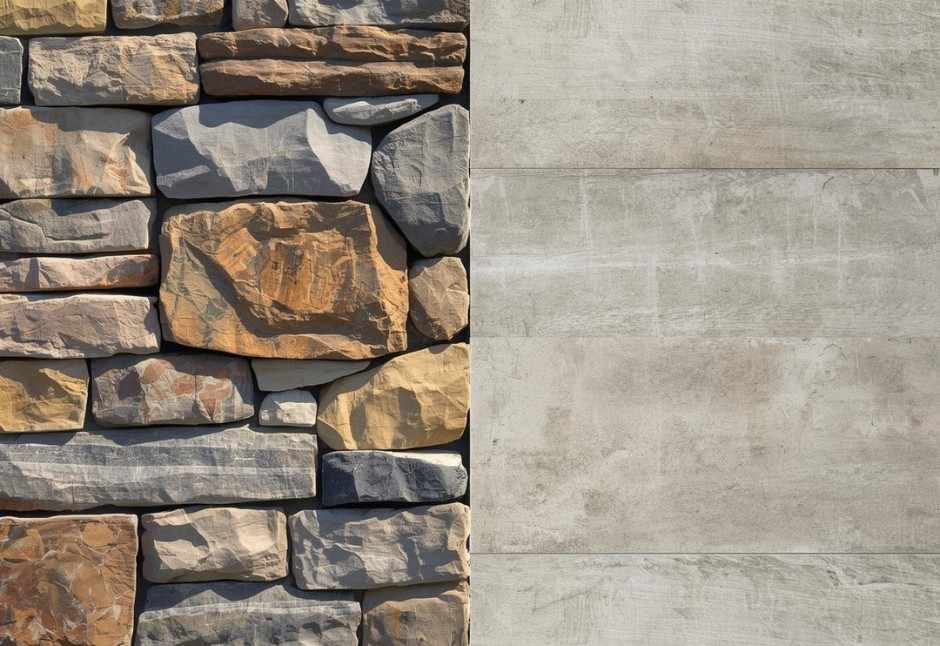
Don’t rush your decision in choosing the type of stone to use for your project.
Be it a magnificent feature wall, some pavers for the outdoor entertaining area, or retaining walls that are here to stay, this is an argument you need to work through – natural limestone versus reconstituted limestone.
I get it. You’re standing in a stone yard looking at samples; they can all start to blend together. What are the differences? They matter more than you might think.
What Actually Sets These Two Apart?
Here’s the thing – natural stone and reconstituted stone are two totally different things, even though they may look slightly similar at first glance.
Natural Tamala limestone is precisely what it sounds like. It is quarried out of the ground here in Western Australia, where it has formed for millions of years.
The natural geological processes that formed the stone have given it its own unique character marks and colour variations. No two pieces are alike.
Reconstituted stone, on the other hand, is manufactured. Think of it as stone that’s been given a second life.
Crushed limestone is mixed with resins and cement-based binding agents and then moulded into whatever shape and size are needed. It’s engineered to look like natural stone, and often, it does a pretty excellent job of it.
The Real Deal: Natural Stone Benefits
There’s something about natural limestone that manufactured products just can’t replicate. That authenticity? You can see it, and more importantly, you can feel it.
Durability that goes the distance
Natural Tamala limestone has proven itself under decades of Australian conditions.
The Bureau of Meteorology’s UV Index data shows that average values across Australia reach 11 or more in January – extreme levels that building materials face day after day.
Natural limestone does not fade under this constant bombardment. It does not crack under pressure the way some reconstituted products can. When properly installed, diamond-cut or quarry-cut natural limestone can last generations without losing its appeal.
Character You Can’t Manufacture
Every slab of natural stone is different, and it has a unique story to tell. There are slight variations in colour, maybe some natural fossils that can be seen, and a change in texture across a single slab—this is what makes the stone interesting.
When used as cladding or paving, the end result is something with real visual interest compared to manufactured stone.
Better long-term value
Yes, perhaps the upfront cost of natural stone is higher. But this is where most people get their maths wrong – they consider only the buying price.
Natural limestone has low maintenance requirements, does not need to be replaced, and increases property values. Try getting that return on investment from reconstituted products that might need attention or replacement down the track.
Where Reconstituted Stone Makes Sense
I’m not going to sit here and tell you reconstituted stone is all bad. It has its place, and for some situations, it might be what you’re after.
- Budget-Friendly Starting Point: If you’re working with tight margins, reconstituted stone gives you a stone look without the natural stone price tag. For temporary projects or rental properties, it can do the job.
- Uniform Appearance: In some projects, that perfectly consistent look is required. Reconstituted stone can provide a level of uniformity that natural stone never could—every piece manufactured to identical specifications.
- Lighter Weight Options: The reconstituted products are generally lighter than natural stone and thus easier to handle during installation. This becomes a practical advantage in certain applications where weight matters.
These advantages may make reconstituted stone attractive in certain applications.
However, before making a decision based purely on apparent initial cost savings, it is worth considering the broader aspects. What works for a short-term rental might not be the best choice for your permanent home, and that uniform appearance comes with trade-offs that aren’t always obvious until later.
The Reconstituted Stone Disadvantages Nobody Mentions
This is where the discussion becomes particularly intriguing, as these disadvantages are often overlooked in preliminary conversations.
Long-Term Durability Issues
Reconstituted stone contains binders and resins. They break down. UV exposure, moisture, temperature cycling – it all takes its toll.
Surface degradation, colour fading, or even a weakening in the structure might be observed—effects that simply do not take place with natural limestone.
The stone industry has seen more than enough reconstituted products that looked fantastic on day one but started showing their age well within a decade.
Repair and Replacement Headaches
Such degradation is something most people never even think of until it’s too late.
Trying to find a match for reconstituted stone several years down the track becomes impossible because manufacturers change their product lines, discontinue colours and always seem to be “improving” their formulas.
Natural stone? Matching pieces can be found with relative ease, even years later.
Environmental Questions
Natural limestone is just that – natural. It’s taken out of the ground, cut, and installed. Making reconstituted stone involves energy-intensive manufacturing, chemical binders, and industrial processes.
Infrastructure Australia’s research on embodied carbon reveals that material production accounts for the largest portion of emissions in construction. If sustainability matters to you, this topic is worth considering.
The Moisture Issue
Reconstituted stone can be more porous than natural stone, and it does not behave towards water in quite the same way. All this becomes very relevant in any high-humidity area or an area frequently exposed to water. That uniform surface you paid for begins to show problems when moisture gets in where it should not.
Making Your Decision: What Really Matters
How best to choose among these? It comes down to a few essential factors particular to your situation.
- Consider Your Timeline
Are you building your forever home? Are you considering investing in a commercial property? Then natural stone makes more sense. It’s that simple.
For projects where longevity matters, you would rather not be the person replacing deteriorated reconstituted products in fifteen years when natural limestone would still look fantastic.
- Consider Your Local Climate
The reconstituted manufacturers are mostly based over east – in milder, wetter climates.
Our intense, dry summer sun alone is enough to test any product, not to mention the wild winter winds and storms that whip sand and salt up to thirty kilometres inland across the coastal plain.
Natural Tamala limestone has evolved specifically to handle these conditions – it’s been doing exactly that for millions of years.
- Factor in Maintenance Reality
Natural stone just needs periodic sealing and basic cleaning. Reconstituted stone might need more attention, especially as it ages and those binding agents start breaking down. Be honest with yourself about maintenance.
- Application Matters
Applications vary. In a feature wall or some decorative element that does not undergo perpetual wear, reconstituted stone may also suffice.
However, for high-traffic pavers, retaining walls or cladding constantly exposed to elements, natural stone is the smarter choice.
What Professional Installers Know
Ask any installer with decades of experience in the industry. They will all give you the same answer. They have seen reconstituted products fail.
They have had to go back and redo jobs because some stone did not hold up, and they know installations of natural limestone that still look incredible forty years later.
There is a reason that natural stone continues to be specified for commercial projects and high-end residential developments and by architects who have actually considered – and care about – the lifespan of their work. They have done the research. They’ve seen the comparisons. And they know what performs.
The Cost Conversation Nobody Wants to Have
Let us talk about money for a moment because this is where people make the most expensive mistakes.
What about the price difference between natural and reconstituted stone?
It becomes negligible when you factor in lifespan. If reconstituted stone has a life of ten to fifteen years before replacement and natural stone gives a life of fifty-plus years, which one is actually cheaper?
Add in the property value consideration. Natural limestone adds genuine value. Estate agents know this, buyers recognise it, and valuers factor it in. Reconstituted stone? Not so much.
Where Meteor Stone Fits Into Your Project
You might be leaning towards natural. You might still be weighing options. Working with suppliers who actually quarry and process their stones makes a difference. Meteor Stone has been quarrying Natural Tamala limestone since 1981, which means they know the product from the ground up.
Their range spans from diamond-cut precision products to textured quarry-cut options.
West Australian limestone has proven itself over thousands of projects, including blocks for retaining walls, bricks for feature work, cladding facades and pavers on outdoor spaces.
Making Your Final Call
Here’s what it really comes down to. If you want stone that will outlast your mortgage, deal with Australian conditions without drama and give you that real character that makes a project special – natural limestone is what you’re after.
The upfront investment pays dividends in durability and aesthetics as well as long-term value.
Reconstituted stone is useful for makeshift solutions or when a project is under significant financial pressure. But is it the preferred option for significant developments?
For projects that matter, it’s worth doing right the first time.
Consider what you are building – and how long you need it to last. When these factors align, the decision becomes more straightforward.
That kind of know-how turns projects into successes rather than needing eventual do-overs.
Contact Meteor Stone today; your outdoor landscaping and feature walls deserve materials that will stand the test of time.
Related posts

